Welcome to Cannabryl
Licensed to Manufacture Medicinal Cannabis Based Drugs
The composition of cat and dog organs are quite similar to our own as humans. Though we physically look nothing like our favorite cats and dogs, our bodies are so much more similar to theirs than you might think.
From an internal viewpoint, humans and domesticated animals are very similar, and therefore, the collective responses to THC, CBD, and hemp-based products are nearly identical. Pets and people alike can sometimes exhibit increased levels of anxiety and paranoia where THC is involved. In contrast, CBD and hemp-based products have very healing and calming effects.
What is the Endocannabinoid System?
As you might suspect by the name, the endocannabinoid system is specifically designed to process cannabis-based products and the cannabinoid compounds found in them. In fact, this system was named with the word cannabis in mind.
First and foremost, the endocannabinoid system of dogs and cats works to regulate an incredibly wide array of bodily functions.
Some examples of the functions that the endocannabinoid system is responsible for include…
- Balance and coordination
- Muscle movement
- Reproductive systems
- Activation and suppression of appetite
- Digestive tract
- Memory and recollection abilities
- Heart rate and blood pressure
- Ability to feel pain and pleasure
- Mood regulation and stability
- Reproductive processes in males and females
- Development of the brain
- Internal clock
The Relationship between the Endocannabinoid System and CBD for Pets.
Now that we have reviewed the cannabinoid system, let’s talk about how it relates to CBD oil for pets, as well as how this system interacts with CBD. When pets ingest CBD oils, extracts of any strain, or treats made with cannabis-based ingredients, the endocannabinoid system jumps into action to process the cannabis. Once the endocannabinoid system is activated, the effects of CBD and hemp begin to display themselves.
Endocannabinoid Systems of Cats and Dogs: Cannabinoids and Their Receptors
Cannabinoids influence certain parts of your pet’s brain. From the brainstem on up towards the brain, cannabinoids affect all parts of the central nervous system. The brain of cats, dogs, and even humans is categorized into three primary regions. From the posterior to the anterior, these sections are the hindbrain, the midbrain, and the forebrain.
From there, the brain is further divided into four lobes: occipital, parietal, frontal, and temporal.
There are many other distinct parts of the brain, including...
- Brainstem
- Cerebellum
- Pineal gland
- Thalamus
- Hypothalamus
- Hippocampus
- Amygdala
- Pituitary gland
- Cerebral cortex
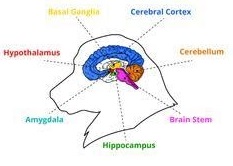
Cannabinoids alter the functioning of many parts of the brain. These areas include the amygdala, hippocampus, hypothalamus, cerebral cortex, basal ganglia, brainstem, and cerebellum.
Within the endocannabinoid system exist two different receptors: CB1 and CB2. The CB1 receptors are mostly found within the primary nervous system. CB1 receptors are located in and around the spinal cord and brain of your pets.
As such, the CB1 receptors play a large role in assisting with regulation. From storing memories and suppressing hunger, to expressing moods and registering an appetite, CB1 receptors are necessary to the overall functioning of your cats and dogs.
In contrast, the CB2 receptors are primarily situated in the immune system, though there are some located in the nervous system as well. Compared to the CB1 receptors, the CB2 receptors are the endocannabinoid receptors more involved in processing CBD oils. When your cats and dogs digest products that contain even a small trace amount of CBD, the CB2 receptors are activated. They work hard to bring your pet’s body to a place of calmness and serenity.
When CB2 receptors bind to CBD, the two substance interact in a way that causes tranquility and relaxation in the body of your pet. CBD oils for pets are created with CB2 receptors in mind. When they come together, pain relief is possible, as are the many other beneficial, positive side effects of CBD for cats and dogs.
Once CB2 receptors bind to the CBD molecules, the functioning of your pet’s immune system is immediately improved. If your pet is experiencing inflammation as well, you will notice a significant decline in symptoms and your pet will become more physically able and active, just like old times. Without CB2 receptors in the endocannabinoid system, CBD oils for pets would not be nearly as effective, if at all.
What are Endocannabinoids?
Within the endocannabinoid system are actual endogenous cannabinoids, called endocannabinoids. The entire system is named for these endocannabinoids because they are so important in the process of breaking down CBD in the body and having its properties unfold.
As part of the central nervous system and the peripheral system, endocannabinoids are made up of lipids. They are neurotransmitters, meaning that they transfer chemicals to and around the brain of your pets. Endocannabinoids work in tandem with the cannabinoid receptors, both CB1 and CB2. Essentially, endocannabinoids are necessary for cannabinoid receptors bind to CBD molecules and release the calming effects so unique to CBD oil and products.
There are two types of endocannabinoids: anandamide and 2-AG. As the first known endocannabinoid, anandamide plays a crucial role in the functional abilities of CB1 and CB2 receptors. As you know, CB1 and CB2 receptors are cannabinoids that bind to CBD molecules. Without these receptors, CBD would not have anything to attach to and therefore its effects would not be expressed. Without active expression, CBD would not be an effective treatment for pain, inflammation, stress, anxiety, or any of its other healing abilities.
The other type of endocannabinoids is called 2-AG, which is short for 2-arachidonoyl glycerol. Similar to anandamide, 2-AG endocannabinoids also engage with the two types of cannabinoid receptors, though 2-AG’s interactions with CB1 and CB2 are very different than the interactions that cannabinoid receptors share with anandamide. In particular, anandamide cannot fully unleash the effects of CBD on its own, so 2-AG taps into CBD molecules in a way that anandamide cannot. The two primary types of endocannabinoids work together to express CBD in full.
Now that you know about the way CBD oils and the endocannabinoid system interact with each other, let’s dive into CBD and its properties.
Everything You Need to Know About CBD for Pets
There is a plethora of information online about CBD for pets. The more research you perform about the effects of CBD for cats and CBD for dogs, the more at ease you will feel about giving CBD and hemp products to your pets. At the end of the day, the decision is up to you. We hope to give you as much information as we can because we understand the importance of being educated about products prior to purchasing them.
When it comes to CBD for dogs and CBD for cats, the effects are purely physiological. Your pets will not experience any alterations to their brain or processing abilities. THC, not CBD, is the natural extract of cannabis that causes psychological changes in animals as well as people. We are adamantly against giving THC to pets because it is considered a mind-altering drug.
Though THC is absolutely harmless, it causes changes in perception and awareness, both of which might confuse and upset your pet. Just because CBD is beneficial to dogs and cats, it does not imply that THC is advised. In fact, THC is very dangerous for animals.
From hyperactivity and an increase in noise making, to overproduction of saliva and an abnormal dilation of their pupils, dogs and cats who have ingested anything containing THC can start to panic. In the worst case scenario, your pet might go into overdrive and have a heart attack, seizure, or even slip into a THC-induced coma.
CBD primarily originates from hemp plants, while THC is extracted from marijuana leaves. In order to provide your pet with relaxation without the accompaniment of psychoactive feelings, it is important to always stick to CBD oils for pets.
CBD for pets works to eliminate many unwanted symptoms, including but not limited to…
- Inflammation
- Arthritis
- Anxious tendencies
- Separation anxiety
- Panic attacks
- Physical bodily pain
- Minor and major joint pain
- Heightened stress levels
- Inability to fall or stay asleep
- Seizure disorders
A few other benefits of CBD oil for pets are…
- All-natural medicinal remedy
- Absolutely no by-products or preservatives
- No harm to the body in any way
- Negative side effects are non-existence
- Assists in protecting against early onset of diabetes
- No man made chemicals or additives
- Lowers chance of development of cancer
CBD calms and soothes your cats and dogs. There aren’t any serious or concerning long-term effects of CBD on your pets. If anything, the only thing to be aware of is that your pet’s tolerance for CBD will increase over time
This is nothing to worry about, though. This is just the nature of medications, whether natural or created in a lab. You won’t have to worry about permanently altering your pet either, for the effects of CBD wear off within a few hours of being administered. CBD is the safest known treatment for an incredibly vast number of symptoms.